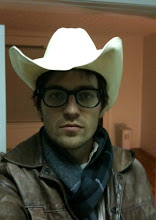
LEO
You can't be afraid of anyone or anything. Why should you be? Where does it get you? Nowhere. You gotta tear through life like a cannonball. You can't let nobody stop you. Momentum. Force. These are the qualities that you need in the world today. You gotta gather some mass. It's the biggest planets that got the most gravity. Life should orbit around you. You should be the sun, the center of your goddamn life, this flaming fucking ball of fire that'll torch up anything that fucks with you. You gotta feel things, you gotta express those feelings, even if it means somebody else doesn’t like it. I’d rather be an asshole than meek. You can't be some little shard of meteor just twirling around.
Now, Wally is ten times better than any of the crap out there. I mean it, Wally’s terrific. He really is. I just hate to see him waste it. Life has always got to be ripening. It's got to expand and grow and unfold in new directions, and if it doesn't than you might as well blow your fucking brains out right now cause you're dead. Just climb into your grave and go to sleep. Good night.
Fear is worthless. It is a worthless fucking emotion. You see a girl, a group of girls, six feet tall in their spiky heels and their hair all poking up like fucking pineapples, go talk to them. The only thing you can do is go talk to them. If you don't, you're dead. You see a guy bigger than you, being an asshole, tell him he's an asshole. Sure, he might sock you in the mouth, but you told the truth, and that's the best goddamn thing you can do in life. Nobody ever tells the truth anymore. Our whole lives, all we do is massage our discomfort, smooth things out into convenience. Well I'm tired of it. I want rough edges, goddamnit! Show me something baby! Show me something real. There's a whole palette of emotions out there. I want them all! I wanna know what it's like to starve, I wanna feel despair, elation. You gotta throw some Hail Mary’s. Maybe not every play, but sometimes. If you avoid these emotions, these wide thrown emotions, if you clamp some lid on your low-simmering melancholy, this ennui that everybody seems to be feeling these days, well that's it now, isn't it? Not for me, goddamnit. I'm loud. I say what I mean. I feel things.
All this alienation, everybody's alienated. There's some kind of society happening that everybody seems to be alienated from. Where? Where is this society that no one seems to be a part of? That’s pushing us all over the edge of the cliff. I got news for you, Mack. You’re standing in it. You are it. We all are. Fuck it. Who cares? The worst thing is to be alienated from your own feelings, to stuff a sock into the mouth of that voice screaming inside you to go fuck that girl in the neon dress.
**************************************************************************************
ARTIE
It’s really quite odd how different dog piss smells than human piss. Just this morning I was sitting out on the deck with a cup of coffee and my little notebook and Rudy, one of our dogs, came up and splashed some piss on the deck about ten feet from me. Bosco, our other dog, not one to be outdone, came over shortly thereafter and squirted his stuff all over the same spot. Well, I’ll tell you, the stench got to be so rancid that I had to get up and go inside. I could not bear it. And yet, just the night before, since they’re redoing the bathroom and our water’s been turned off, I was pissing on the fence out back. I’d had a bowl of Golden Puffs earlier and I don’t know if you’ve ever had Golden Puffs, but one of their most charming qualities is that they make your pee smell exactly like them! So here I was pissing in the grass in the moonlight and up wafted this wonderful smell of Golden Puffs and I quite enjoyed it! I lingered for a few moments, drinking it in, and Rudy came over with a quizzical look and he stuck his snout down there and investigated it and I went inside with a big smile on my face.
For many people, this would not be a significant part of their day, let alone their lives, but for me, any time I piss in my backyard, or sleep in a tent or someone flips me off in traffic, it’s newsworthy. It can shake me up for quite a little while. I mean, here I am telling you about dog piss! I don’t know.
*****************************************************************************
LEO
Wally used to do this thing, he told me, where any time he would enter a new room, first thing he would immediately figure out what his escape route would be if he somehow became trapped. (Laughs) Which wall he would scurry up, which window he’d climb out of. I mean, that’s just about the ultimate in paranoia. In a way, that’s a pretty good metaphor for what the syndrome of being Wally is all about. This is a cat who never enters into anything, a relationship, an institution, a gas station for chrissakes, until he feels it’s absolutely secure. He’s always circling outside things, sizing them up, figuring the odds, and he always takes the lowest risk or nothing at all. Subsequently I think he’s lost out on a lotta opportunities, a lotta living.
*************************************************************************
ARTIE
I don’t know if I like all this self-improvement that’s going on around me. Granted, I’m a deeply vain fellow. I can’t go out in public if I feel I haven’t had the chance to preen myself properly, if I’m insufficiently coiffed, but I can’t help but think all these vegetarians and people who go jogging and only use organic products aren’t doing it because they want to help anyone, or save the world, they’re doing it purely out of vanity. What this says to me is that these people think they’re so important that they owe it to the world to preserve their physical and mental facilities as long as possible. There’s a thinly veiled disgust in these people’s criticism of the fast-food diet’s many of us are on. They’re not against double cheeseburgers because they’ll kill you, they’re against double cheeseburgers because they’ll make you fat and ugly. I’m not quite sure what to make of these people, these brand consultants and triathalon runners, these goal-oriented people devouring life like it’s a Powerbar, working 60 hours a week, running ten miles a day. Where are they running? It seems to me they’re not running to anything. It seems to me they’re running from something. Have you ever looked at their faces? They’re miserable! They heave and burn and sweat, their arms limp like little Hamster claws, an excruciating look in their eyes, like they’re doing everything they can to ignore the pain. They look like they’ve been running from Godzilla for 3 days straight, liked he's coming to crush any love anyone may have to give them.
Don’t get me wrong, people have to do things. I mean, we can’t all be Buddha sitting under a tree. Life sweeps you forward. We have to eat, we have to maintain life. We have to live. And it’s very hard to find a moral way to do this, especially one that society will allow you to have. I mean, it would take a lot of courage today to go around like Walt Whitman or Jack Kerouac “afoot and light-hearted” just wandering around or hitch-hiking and expanding your consciousness. The world doesn’t seem to want you to do this. It wants you to pack your consciousness, your opinions or thoughts or whatever, into a little tin lunch box. If I were to take my rucksack and go stand by the side of the road with my thumb out the police would immediately throw me in jail! That is, if some homicidal maniac didn’t chop my head off first. But, supposing I got past the police and the axe-murderers out there, I mean, is there anything really left to see? Is it all just one long corridor of strip malls lining Route 66? Is it one neon smear of Appleby’s and Wal-Mart all across the land? Maybe the whole blasted world is just as it is here, all Golden-Arches and pavement and telephone wires.
****************************
LEO
Despair’s got a kind of sweetness, like wine. It's a thing rotting, it's a poison, but it's delicious, in its way, it's intoxicating. I savor it goddamnit. I savor it. Granted it ain't my preferred mode of life, but I'll take it. As human beings, the best things we can be are vessels for emotion. Sure, we always strive for happiness, but we shouldn't settle for comfort goddamnit. This bland, banal, numbing comfort. Life is not merely a waiting room for death, with muzak playing for everyone to ignore and quaint little paintings for no one to look at and flowers stitched out of fucking synthetic plastic that will never die and won't make you sneeze. Fuck that! I want knife edges. I want broken glass. I want to go out tonight and have an orgasm that explodes like a supernova, that echoes and sends shockwaves through the whole goddamn galaxy. I want poetry. I don't want fucking romance novels.
29 December 2009

10 December 2009
REASONS FOR LIVING: DECEMBER 10 2009
_03.jpg)
THE CIRCUS - CHARLIE CHAPLIN
Never seems to come up much in discussion of Chaplin, a really funny movie, with perhaps the most astonishing image I've ever seen in a Chaplin movie, the finale where the Circus train speeds away, leaving the Tramp behind in the center of the traces of the Circus Ring. A bittersweet punctuation on the end of the silent era, the end of vaudeville, the end of the golden age of comedy.
ELVIS PRESLEY - THAT'S SOMEONE YOU NEVER FORGET
Written by Red West based on something Elvis said, may be The King's most haunting record. A hymn to his dead mother.
GREAT JONES STREET - DON DELILLO
Pee-pee-maw-maw
THE RANDYS
The best band in Columbus, Ohio, but you aren't gonna find another band like this anywhere. Romantic without being schmaltzy, harmonies like clouds of perfume, a crowd full of girls in pretty dresses dancing, actually dancing.
THE DICTIONARY
Frank O'Hara supposedly read a page every day. I thought that sounded like a good idea, so I started. Try it. It's a weird experience.
MERLE HAGGARD
The guy invented the identity that essentially every male country singer utilizes today: rich baritone, twangy guitar, bump-chicka bump-chicka beat, songs about America, hard work, and drinking. Great because you can't really call him one thing or the other. His beliefs are complicated and his music is deceptively simple.
02 December 2009
Lost in a Dream: Thoughts on Wes Anderson

The first DVD I ever bought was of a movie called Bottle Rocket. Though it cost $27, a lot for a DVD with no special features, and I had never seen it before, I liked Owen Wilson from his small cameo in The Cable Guy, and somehow I knew Bottle Rocket was going to be an important movie in my life. From the first time I watched it, Bottle Rocket has been my favorite movie. It expresses with such comedy and poetry what it’s like to be a young man in a group of young men without women who are trying to create something bigger than themselves. I’ve followed Wes Anderson’s career ever since with the interest one may have followed The Beatles or The Rolling Stones careers in the 60s, anticipating the release of each new work, scrutinizing it to the smallest detail. I have been delighted and surpirsed to see his work get more ambitious, more idiosyncratic, his grip over the mise-en-scene has gotten more sure. As his control, his visability in the media, his popularity has grown, so has the criticism against him mounted. People seem to think he’s lost his way, he’s too full of himself. Granted, I wish Anderson would make another film like Bottle Rocket, less reliant on style and allusion and more grounded in the humanity of the characters, I would argue that his films have grown richer, more ambitious with each new release. I don’t know that he’s of the magnitude of the Beatles or the Rolling Stones, but he is, in a way, one of the premiere artists of this moment. Though he is not affecting change in the way the artists of the 60s did, that may be because he is, as this generation seems to be, not interested in those sorts of things.
What Anderson seems to be interested in is creating an alternate fictional reality. He is, like Quentin Tarantino, a collage artist: assembling ideas, dialogue, fashions, songs, names, images into a new world on film. His films are drenched in the vintage, picked from the thrift bins and the boutiques. In America today, where mass-produced, ready-made corporate inauthenticity is the mainstream, it is no wonder that a section of the younger generation has pilfered their parent’s closets and record collections. Anderson has what Natalie Portman called “the best possible taste.” He picks the most refined elements of pop culture (British Invasion music, New Yorker literary tropes, foreign film motifs) and parades them in a grand pageant across the screen. On DVD commentary tracks and in interviews he freely credits the sources of his work: A line from a Louis Malle film, the look of a San Francisco tycoon, a camera move from Hitchcock. Even proper names are borrowed from a vaguely understood upper crust: Hotel Chevalier, Voltaire No. 5, the Lindbergh Palace Hotel. I don’t think Wes’ penchant for theft makes him an illegitimate artist, but perhaps a representative artist of this era. Like Picasso said, “The good artists copy, the great artists steal.” What does an artist do but steal? The work has to come from somewhere. It’s just that, until recently, most art was “stolen” from life: The painter refashioned a sunset as his eye saw fit, a writer grafted the personality of a friend onto a character, the actor stole a gesture or a walk from a person on the street. Artists today are still stealing from life, it’s just that so much of our lives are spent absorbing art. Anderson’s sensibility, his ability to orchestrate a scene, is so powerful that these stolen things become new again. One of our only frames of reference, one of the only things that unites cultures across the world in this age is popular culture. The lines of communication which people used to use to relate to each other, such as small town gossip, have been stretched until they snapped by modern technology. One of the only ways to relate in a global community is through a global popular culture. As a result of this, we are required to assemble our identities from the music we listen to, the clothes we wear, the movies we like. We use them to signal others that, since we like the same things, perhaps we think the same way, perhaps we should be friends. Wes Anderson gathers up the ribbons of culture that appeal to a certain type of mind and tie them around pretty little packages containing character and emotion. The problem is that Anderson’s films have become less about what's inside and more about wrapping paper.
What some people view as superficial: clothes, taste, style, Wes Anderson sees as external manifestations of the inner integrity of a person. The problem is that his films celebrate these things while willfully ignoring the unattractive “larger” questions of life. His characters are probably interested in things like politics, philosophy, war, poverty, etc., but Anderson seems averse to exploring these issues in his films. In The Darjeeling Limited, the Whitman brothers go on a “spiritual journey” to India and nary a word is mentioned about whether they believe in God or the specific differences between Hinduism and whatever it is that they practice. Perhaps these things were meant to be a hypocritical part of the characterization, or to be implicit, alluded to in the environments and actions of the story but not in words. It seems curious that Anderson, a philosophy major in college, isn’t interested in exploring these questions in his work. On the Criterion DVD for The Life Aquatic an interviewer asks him if he believes in the devil. His answer: “I’m not really interested in that.”
.jpeg.jpg)
Although some of the appeal for me of Anderson’s work lies in the frippery, the real nutrients, the stuff without which the films wouldn’t be great, is the emotional current powering the whole machine. As Martin Scorsese said, Anderson “knows how to convey the simple joys and interactions between people so well and with such richness.” This is why Bottle Rocket remains my favorite Anderson film. It is no coincidence that the film is the most stripped of the patented Anderson style. The Darjeeling Limited is a kind of update of Bottle Rocket: both were made in a sort of loose, adventurous way, both are about three guys (friends, brothers) on a freewheeling journey hoping to discover themselves, and both are insightful and inventive in their own ways, but, to me, The Darjeeling Limited, while being the more fully realized film, lacks the magic, the spark of Bottle Rocket. Don't get me wrong, I like The Darjeeling Limited very much, but the superficial elements, the clothes the characters wear, the locations they are able to travel to, the lifestyles they can afford, are a zillion miles from my reality, and so the film does not come as close to my heart. Although Anderson likens his movies to fables, of unspecified time and place, his earlier films were more grounded in reality, and this had much to do with their success. He hasn’t quite figured out how to give the story the same gravity in the flamboyant worlds he has, with his growing stature as a director, been given resources to create. He seems in love with his own style, averse to abandoning, or even modifying it. With each film he plunges deeper into his inventions, his newest film, The Fantastic Mr. Fox taking place in a world completely fabricated to the smallest detail (I have yet to see the movie, but it has gotten the best reviews of Anderson’s career thus far). Perhaps he could learn something from his heroes, say, David Bowie or Bob Dylan, who discovered that one way for an artist to stay relevant is to constantly be shedding his image, reinventing himself. In the film world, unlike the music world, this is not exactly a celebrated ideal. The ultimate accolade a film director can receive is to be recognized as an “auteur”, the complete master of his mise-en-scene. This is where Anderson takes his hardest criticism. He has, more than any other director of his generation, developed an instantly recognizable and unique aesthetic, and people seem to hate him for it. The very things that identify a Wes Anderson film are the most heavily criticized. If a director is lucky enough to develop something as hard won as his own vision, perhaps it’s best for him not to abandon it. After all, no one criticized Orson Welles for using dramatic angles and overlapping sound design for his whole career, or Jim Jarmusch for continuing to use long takes and few close-ups. I would argue that, as Anderson’s creative control has increased, as his fictional worlds have become more totally under his control, his films have started to lose their emotional impact, more closely resembling the surreal hyperbole of Max Fischer’s plays than the delicate poignancy of the film Rushmore itself. For example, when Zissou fights the pirates in The Life Aquatic, Anderson clings to the trademarks of his style even when the material demands a different technique. His wide-angle lenses, his preference for framing things at 90 degrees, the use of “Search and Destroy” to prop the whole thing up, cause the sequence to look more like a bunch of kids playing at making an action movie than anything with real suspense or danger. Then again, maybe that’s what he's going for. Anderson seems to keep anything grim at arms length. The scene in the hospital room in The Royal Tenenbaums after Richie suicide attempt is fairly dry, with little display of emotion. The characters in Anderson’s movies never explode. The melodrama is kept tightly lidded, as if it would be unfashionable, uncouth to erupt in feeling. Steve Zissou, probably Anderson’s most ambitious and not quite successful character, is too close to a caracature to really bleed through to us emotionally. We become fatigued by the fashion, are pushed so far from the characters by their eccentricity that their pain no longer seems real. It’s much easier for an audience to sympathize with a Dignan, a Max Fischer, mad dreamers whose fantasies clash so violently against the gloom of reality. Max is banished from Rushmore to a public high school. Dignan goes to jail. Dignan's yellow jumpsuit, Max's red beret certainly say a lot about who they are, but they are not smothered by them. Max’s uniform is touching, it reflects his yearning to be a part of the Rushmore elite. It is somewhat pathetic in it’s shabby impersonation of wealth, and we cannot fault him for this. In his more recent films the characters, perhaps like the man himself, no longer have any reality to bounce against, they are swept up in the absurd grandeur of the tapestry they inhabit. Anderson, unlike his early heroes, has achieved his dreams. He has an apartment in Paris, one in Manhattan, critical acclaim as a film director. Dignan and Max Fischer are trapped in a world which will not bend to their fantasies, no matter how they struggle. His later protagonists have been born into the aristocracy, they are no longer outsiders trying to get in, and their unhappiness seems more like torpor than fury. Dignan and Max Fischer are poor boys with nothing but their spunk, their moxie, to drive them to the top. When their dreams are slammed down, the audience feels this. It is much harder to sympathize with some rich has-been lost in metropolitan ennui. When Zissou’s life crumbles around him, it’s too surreal to break our hearts.
Anderson seems to have anticipated, and in part facilitated, an entire generation’s collapse into adolescence. As Richie and Margot and Chas Tenenbaum remain petrified, like some living exhibit to their own glory, their most honest, childhood selves, so do many of the current 20-somethings in America. Childhood was a pretty wonderful time for us. It was probably the only time in our lives we were allowed to be honest, impulsive, without fear of society lashing us into conformity or obedience. We were celebrated as children, our creativity was encouraged, our dreams were fostered. It is a time before our parents were divorced, when we liked TV shows or videogames because we liked them, not because it was hip to like them. We enshrine this part of our lives. This is the Catcher in the Rye mythology, the struggle to retain innocence against the demands, the hypocrisy of modern adulthood, and Anderson’s work is a kind of refinement, an update of this myth. The Tenenbaums, Max Fischer, Dignan all resonate with us because we see ourselves in them, or at least fantasies of ourselves. We would like to believe that we are beautiful disasters, neglected, maudlin, gifted; that we were on the path to greatness but somehow our glory vanished along the way. We have become lost in tangly beards and irony and shield ourselves from emotional battery behind headbands and sunglasses and blase expressions. Our generation inherited the world left behind after the 1960s, when all the ancient struts propping up notions of identity, truth, beauty, politics, spirituality were torn up and strewn about for us to reassemble. There are a lot of questions that we don’t know how to answer, and, in a way, we have chosen not worry about them. We don’t know if we care one way or the other if there’s a God. We aren’t much concerned with politics. We certainly don’t want to work in cubicles. We see ourselves as creative. We aspire to be geniuses, rock stars, auteurs. We strive for our dreams, but as they pass us by, we champion our failures, which is what Wes Anderson’s characters do. We believe, we were told, as they were, that we had all the potential in the world, but life didn’t lift us where we thought we’d go. Rather than make films that are discourses or arguments about politics or philosophy or spirituality, Anderson’s films deal more directly with the problems of a child whose development was arrested when he was seven years old and his parents divorced. The recurring conflict in his films is between that of a young dreamer or idealist and a brash, insensitive father-figure. Anderson is most specifically interested in the question: What does it mean to be a man? Royal Tenenbaum is a send up of certain type of old-fashioned, perhaps antiquated, notion of manhood: an ascot wearer, highball drinker, litigator, womanizer, who smokes his cigarettes in a long ebony holder and emotionally roughhouses with children all on tiptoes reaching for his love; Steve Zissou brandishes his physique in a bathrobe and a speedo, belly bending out, sipping a Compari or dispatching an entire band of Filipino pirates with a small handgun, his entire crew vying for his approval. The most appropriate metaphorical image in Anderson's work for this generation seems to be that of Eleanor Zissou lying, dreamy eyed, possibly stoned, in the observational bubble of the Belafonte as Ned Plimpton’s body sinks into the water before her, buried at sea. She certainly is aware of the funeral taking place on deck, and she’s not being insensitive by not attending, it's just that the pain would just be too much for her. It’s not that we young people are oblivious to the pain and suffering going on around us in the world, it’s not that we’re apathetic, it's that we've been left with this huge pile of questions to sort out, and rather than deal with them we wallow in ennui. We grieve in our own way.

21 November 2009
Two Country Songs
Playing a lot of weddings in more rural areas, I've been listening to some country music lately, and I kind of like it. There is a kind of stubborn insistence on clenching tightly to certain cliches (Jesus, Beer, Pick-up trucks), but I admire the literary quality of the lyrics. They seem to fit a lot more story into their songs than other forms do.
I was driving through Southern Ohio, where a lot of my family comes from, and I was really affected by the beauty of the place. It seems like that region is having a rough go of it right now, and though I don't agree with much of their politics, sometimes I'm jealous of their way of life. The first song is kind of about that.
MY HEART IS IN THE COUNTRY
My family moved up here from a town down south
Cause all the work dried up when the paper mill shut down
I want to move back to the country and find me a girl
Rip the boards off a farmhouse away from the world
Buy me a little plot of land
Plant some corn and watch grow
Dig my fingers in the soil
Feel my heart burn in my chest like coal
CHORUS
I want to move to the country where the girls are pretty
Their little jean shorts are teenie weenie bitty
My mailing address may be here in the city
But my heart is in the country
Have a stable full of horses and a house full of dogs
Wake up in the morning, get lost in the fog
Go swimmin’ in the earth, fishin’ in the creek
Show my boys how to shoot like my dad done with me
Well the smog climbing from the smokestacks
Look like Heaven flying up to the sky
And TV Tower on the hillside
Beside the cross, they shine so bright
CHORUS
I wanna move to the country where the speed limit is 50
But on them county roads at night you can be a little shifty
My F-150 may be parked in the city
But my heart is in the country
Down on Main Street it ain’t safe at night
The shop windows are broken, can’t afford the streetlights
Out roaming in the fields, you can sense the ghosts
In your headlights you can see the deers shredded in the road
The frozen wind is blowin’
Through the skeletons of abandoned cars
But the lights are so bright in the city
At night you can’t see the stars
CHORUS
You can tell them city folks that I don’t need their pity
High class ain’t got nothin’ on that down home nitty gritty
I may be pumpin’ gas up here in the city
But my heart is in the country
**************************************************
I've always had a kind of fantasy about being a truck driver, and many of the great musicians either were truck drivers, or sang about being truck drivers. This song is kind of about what that life may be like.
ENDLESS HORIZON
I’m burning down the miles, just torching them up
When I get behind the wheel of that big old truck
I’m a man on a mission, best get outta my way
I’m a concrete cowboy riding for my pay
And the days go by
like the painted lines
And all night I’m looking
for a lit-up sign
That says three miles left
to the roadside rest
I can lay down my load
Til the sun peaks the crest
Of that endless horizon
That’s just a-risin’ everyday
In the morning I’m plowing through the midwest corn
When the evening comes around I’ll be pulling my horn
For them pretty little women that they got down south
But the very next day I’m in the Rocky Mountain Clouds
And the days go by
like the painted lines
And all night I’m looking
for a lit-up sign
That says two miles left
to the roadside rest
I can lay down my load
Til the sun peaks the crest
Of that endless horizon
That keeps getting further away.
I got a beautiful wife and a baby back home
I heard his first words on a long distance phone-call
Sometimes I wonder what I’m missing on that road at night
As I’m staring at their picture in the soft-dome light.
And the days go by
like the painted lines
And all night I’m looking
for a lit-up sign
That says two miles left
until my hometown
And for a couple days
I won’t have to go down
That endless horizon
I’m gonna reach the edge someday
I was driving through Southern Ohio, where a lot of my family comes from, and I was really affected by the beauty of the place. It seems like that region is having a rough go of it right now, and though I don't agree with much of their politics, sometimes I'm jealous of their way of life. The first song is kind of about that.
MY HEART IS IN THE COUNTRY
My family moved up here from a town down south
Cause all the work dried up when the paper mill shut down
I want to move back to the country and find me a girl
Rip the boards off a farmhouse away from the world
Buy me a little plot of land
Plant some corn and watch grow
Dig my fingers in the soil
Feel my heart burn in my chest like coal
CHORUS
I want to move to the country where the girls are pretty
Their little jean shorts are teenie weenie bitty
My mailing address may be here in the city
But my heart is in the country
Have a stable full of horses and a house full of dogs
Wake up in the morning, get lost in the fog
Go swimmin’ in the earth, fishin’ in the creek
Show my boys how to shoot like my dad done with me
Well the smog climbing from the smokestacks
Look like Heaven flying up to the sky
And TV Tower on the hillside
Beside the cross, they shine so bright
CHORUS
I wanna move to the country where the speed limit is 50
But on them county roads at night you can be a little shifty
My F-150 may be parked in the city
But my heart is in the country
Down on Main Street it ain’t safe at night
The shop windows are broken, can’t afford the streetlights
Out roaming in the fields, you can sense the ghosts
In your headlights you can see the deers shredded in the road
The frozen wind is blowin’
Through the skeletons of abandoned cars
But the lights are so bright in the city
At night you can’t see the stars
CHORUS
You can tell them city folks that I don’t need their pity
High class ain’t got nothin’ on that down home nitty gritty
I may be pumpin’ gas up here in the city
But my heart is in the country
**************************************************
I've always had a kind of fantasy about being a truck driver, and many of the great musicians either were truck drivers, or sang about being truck drivers. This song is kind of about what that life may be like.
ENDLESS HORIZON
I’m burning down the miles, just torching them up
When I get behind the wheel of that big old truck
I’m a man on a mission, best get outta my way
I’m a concrete cowboy riding for my pay
And the days go by
like the painted lines
And all night I’m looking
for a lit-up sign
That says three miles left
to the roadside rest
I can lay down my load
Til the sun peaks the crest
Of that endless horizon
That’s just a-risin’ everyday
In the morning I’m plowing through the midwest corn
When the evening comes around I’ll be pulling my horn
For them pretty little women that they got down south
But the very next day I’m in the Rocky Mountain Clouds
And the days go by
like the painted lines
And all night I’m looking
for a lit-up sign
That says two miles left
to the roadside rest
I can lay down my load
Til the sun peaks the crest
Of that endless horizon
That keeps getting further away.
I got a beautiful wife and a baby back home
I heard his first words on a long distance phone-call
Sometimes I wonder what I’m missing on that road at night
As I’m staring at their picture in the soft-dome light.
And the days go by
like the painted lines
And all night I’m looking
for a lit-up sign
That says two miles left
until my hometown
And for a couple days
I won’t have to go down
That endless horizon
I’m gonna reach the edge someday
A Piece of Doggerel
What a joy it is to rise today!
To rise and meet the sun!
There’s no one I despise today!
I welcome everyone!
Exclamation points explode today
like fireworks in the sky!
Happiness comes easily!
I ask no questions why!
My poem tumbles freely now,
Not like a knot I must unlace.
The lazy battle’s shrugged away,
I withdraw from the race.
I take the lines as they come to me,
riddled with cliche.
I leave to write a real poem
to task another day
Suddenly I look to see
rain falling from the clouds.
Today’s not so nice after all.
No visitor’s allowed.
To rise and meet the sun!
There’s no one I despise today!
I welcome everyone!
Exclamation points explode today
like fireworks in the sky!
Happiness comes easily!
I ask no questions why!
My poem tumbles freely now,
Not like a knot I must unlace.
The lazy battle’s shrugged away,
I withdraw from the race.
I take the lines as they come to me,
riddled with cliche.
I leave to write a real poem
to task another day
Suddenly I look to see
rain falling from the clouds.
Today’s not so nice after all.
No visitor’s allowed.
The Best Thing Around
People say that love’s the best thing around
so what does that leave you when you’ve finally found
that it’s often the finest who end up alone
and it’s the rotten bastards who can’t mute their phones?
Women know they go for the dangerous kind.
They say to themselves “Oh why can’t I find
a nice guy?” Why do I always fall for jerks?”
But they don’t want a man who’ll do all the work,
who’ll clean the house and make them dinner,
who’ll bring them flowers and be the breadwinner.
They want a guy who’s fucked all their friends,
Who’s rued by women, and envied by men.
Love is a game, and you gotta know how to cheat.
You can’t win the prize being honest and sweet.
so what does that leave you when you’ve finally found
that it’s often the finest who end up alone
and it’s the rotten bastards who can’t mute their phones?
Women know they go for the dangerous kind.
They say to themselves “Oh why can’t I find
a nice guy?” Why do I always fall for jerks?”
But they don’t want a man who’ll do all the work,
who’ll clean the house and make them dinner,
who’ll bring them flowers and be the breadwinner.
They want a guy who’s fucked all their friends,
Who’s rued by women, and envied by men.
Love is a game, and you gotta know how to cheat.
You can’t win the prize being honest and sweet.
REASONS FOR LIVING: Nov. 21st 2009.
Here's some media that I've been exploring/enjoying lately that I thought I might share with you.
Six Moral Tales: by Eric Rohmer
Criterion boxset

The title may be mistranslated/misleading, as these films aren't really parables of any kind, but instead are sure handed stories of people grappling with love and their own moralities. These films were first written as a series of stories (Collected in a book included in the box set) by Eric Rohmer, a somewhat neglected member of the French New Wave, and certainly exude a literary bone-structure. Either dialogue or voice over heavy, the films are a wonderful and unique marriage of visual poetry and oral sophistication which prove that neither dialogue nor narration is uncinematic.
Bob Dylan and the Band - The Basement Tapes
Saw Bob Dylan in concert a couple weeks ago, and although I am always listening to him, it inspired me to explore albums and songs I hadn't before. The man's body of work is staggering. I remember looking at my parent's copy of this album and thinking the song titles were incredibly bizarre, and probably covers of old Americana stuff. I am shocked to discover that the songs are all original. This album is an anomaly. A complete freak parade. Favorite tracks: "Odds and Ends", "Yazoo Street Scandal", "Apple Suckling Tree."
P.S.-Never liked The Band too much, but I can appreciate what they do. Robbie Robertson is one of my favorite guitar players, Levon Helm kicks ass ("Yazoo" is one of the best vocal performances I've ever heard), Danko and Manuel have beautiful voices and Garth Hudson is about the best rock organist ever. Still, something about their sound doesn't quite add up for me. I like them, but I'm not in love with them.
Here's a video example of Bob Dylan's unparalleled talent for being both a genius and completely weird at the same time.
Fear and Loathing in Las Vegas - Dir. Terry Gilliam
Maybe one of the best comedic performances ever: Benicio Del Toro as the Attorney. I think for a lot of the film you can see Depp's acting, his pretty good impersonation of Hunter S. Thompson, but Del Toro, perhaps having the advantage of playing a person who's not quite as visible a public figure, proves that the most bone-cutting comedy is played with serious gravity. This movie doesn't quite work in every way, but it is funny as hell.
Goldfish Hands - Bernard Diabolik
One of the great poet/shaman/seers/troubadours of our time, Bernard Diabolik drools this 16 minute epic devotional of unrequited love. Best lines:
Scar me with your flaming whip,
Lick me with your serpent tongue,
Bite me with your fangs,
I'm not gonna run.
Taylor Swift
May be the musical artist of her generation. A star with the talent, charisma and magnitude of Elvis, Michael Jackson, Dolly Parton, anybody. She's gonna last. Or maybe I'm just in love with her.
The North Market
Cheap, good food, all conveniently located under one roof. I'm writing this upstairs compliments of their free wi-fi.
The Writer's Almanac podcast
Hosted by Garrison Keillor, a poem a day is good for you.
Bullet Park by John Cheever
I've read a lot of Cheever, which is surprising because I don't particularly love his writing. I really want to, but he's just so wildly erratic. He's very easy to read. Sometimes he's a genius, sometimes there's nothing there, but it always flows. This may be the best Cheever I've read yet. An interesting take on the 1960s from a reluctant lover/ poet laureate of the suburbs.
Six Moral Tales: by Eric Rohmer
Criterion boxset

The title may be mistranslated/misleading, as these films aren't really parables of any kind, but instead are sure handed stories of people grappling with love and their own moralities. These films were first written as a series of stories (Collected in a book included in the box set) by Eric Rohmer, a somewhat neglected member of the French New Wave, and certainly exude a literary bone-structure. Either dialogue or voice over heavy, the films are a wonderful and unique marriage of visual poetry and oral sophistication which prove that neither dialogue nor narration is uncinematic.
Bob Dylan and the Band - The Basement Tapes
Saw Bob Dylan in concert a couple weeks ago, and although I am always listening to him, it inspired me to explore albums and songs I hadn't before. The man's body of work is staggering. I remember looking at my parent's copy of this album and thinking the song titles were incredibly bizarre, and probably covers of old Americana stuff. I am shocked to discover that the songs are all original. This album is an anomaly. A complete freak parade. Favorite tracks: "Odds and Ends", "Yazoo Street Scandal", "Apple Suckling Tree."
P.S.-Never liked The Band too much, but I can appreciate what they do. Robbie Robertson is one of my favorite guitar players, Levon Helm kicks ass ("Yazoo" is one of the best vocal performances I've ever heard), Danko and Manuel have beautiful voices and Garth Hudson is about the best rock organist ever. Still, something about their sound doesn't quite add up for me. I like them, but I'm not in love with them.
Here's a video example of Bob Dylan's unparalleled talent for being both a genius and completely weird at the same time.
Fear and Loathing in Las Vegas - Dir. Terry Gilliam
Maybe one of the best comedic performances ever: Benicio Del Toro as the Attorney. I think for a lot of the film you can see Depp's acting, his pretty good impersonation of Hunter S. Thompson, but Del Toro, perhaps having the advantage of playing a person who's not quite as visible a public figure, proves that the most bone-cutting comedy is played with serious gravity. This movie doesn't quite work in every way, but it is funny as hell.
Goldfish Hands - Bernard Diabolik
One of the great poet/shaman/seers/troubadours of our time, Bernard Diabolik drools this 16 minute epic devotional of unrequited love. Best lines:
Scar me with your flaming whip,
Lick me with your serpent tongue,
Bite me with your fangs,
I'm not gonna run.
Taylor Swift
May be the musical artist of her generation. A star with the talent, charisma and magnitude of Elvis, Michael Jackson, Dolly Parton, anybody. She's gonna last. Or maybe I'm just in love with her.
The North Market
Cheap, good food, all conveniently located under one roof. I'm writing this upstairs compliments of their free wi-fi.
The Writer's Almanac podcast
Hosted by Garrison Keillor, a poem a day is good for you.
Bullet Park by John Cheever
I've read a lot of Cheever, which is surprising because I don't particularly love his writing. I really want to, but he's just so wildly erratic. He's very easy to read. Sometimes he's a genius, sometimes there's nothing there, but it always flows. This may be the best Cheever I've read yet. An interesting take on the 1960s from a reluctant lover/ poet laureate of the suburbs.
Subscribe to:
Posts (Atom)